Description
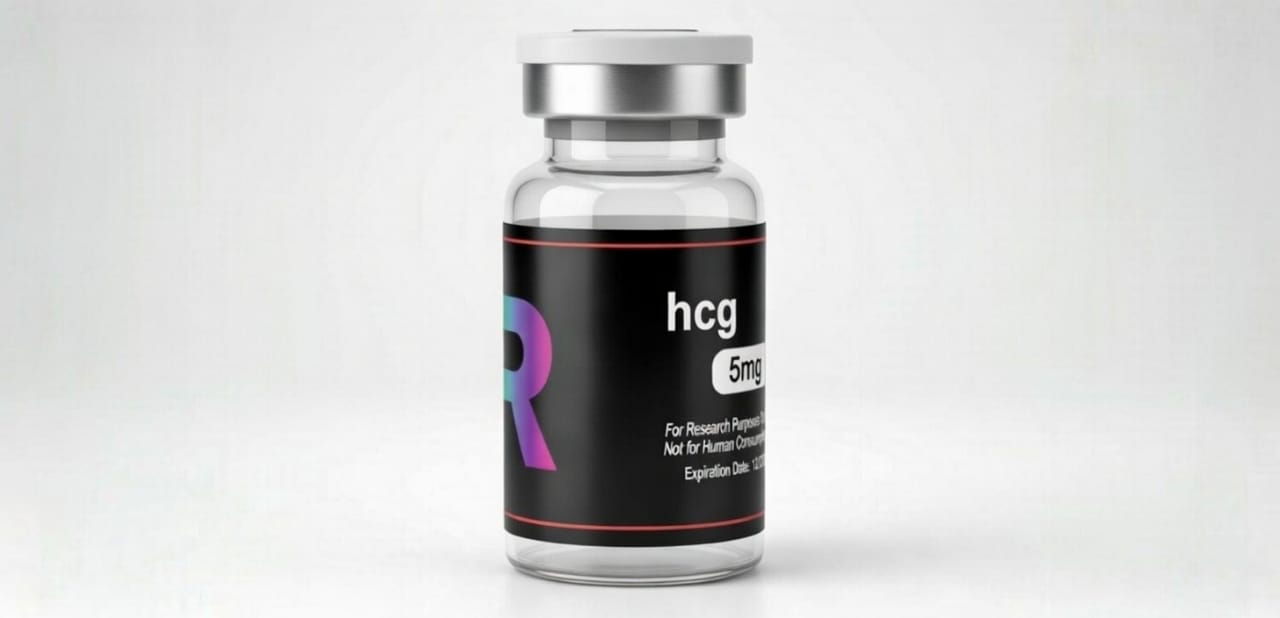
HCG (Human Chorionic Gonadotropin)
Intended for laboratory research purposes only. Not for human consumption
HCG is a glycoprotein hormone produced during pregnancy, structurally similar to luteinizing hormone (LH), consisting of an alpha and beta subunit. It is widely investigated in research for its roles in reproductive endocrinology, steroidogenesis (e.g., testosterone production in Leydig cells), ovulation induction models, and maintenance of corpus luteum function in cellular and animal studies.
Key Chemical Details:
- CAS Number: 9002-61-3
- Molecular Formula: C₁₁₀₅H₁₇₇₀N₃₁₈O₃₃₆S₂₆ (approximate for the full heterodimer glycoprotein; varies slightly by source and glycosylation)
- Molecular Weight: Approximately 36,700 g/mol (commonly listed as ~36.7 kDa; alpha subunit ~14.5 kDa, beta ~22.2 kDa; total varies with glycosylation isoforms)
- Composition:
- Heterodimeric glycoprotein: Common α-subunit (~92 amino acids, identical to FSH/LH/TSH alpha) + specific β-subunit (~145 amino acids for hCG beta, unique C-terminal extension)
- Extensively glycosylated (N- and O-linked carbohydrates contribute significantly to molecular weight, half-life, and bioactivity)
- No single linear peptide sequence (unlike small peptides); potency measured in International Units (IU) via bioassays
- PubChem CID: Varies by entry (e.g., 16132030 for beta fragment; primary substance entries like SID 135304095 or related for full HCG; often referenced under Chorionic Gonadotropin)
- Appearance (typical research grade): White to off-white lyophilized powder
- Storage: Typically -20°C (as lyophilized powder for stability); reconstituted: 2–8°C refrigerated or frozen aliquots to maintain potency
- Other Properties:
- Biological activity: Standardized in IU (e.g., 5000 IU or 10000 IU vials common in research); mimics LH action on LHCG receptor
- Amphiphilic and highly polar due to extensive glycosylation and charged residues
- pH of reconstituted solution: Neutral to slightly acidic
- Sensitive to heat, light, agitation, and improper reconstitution
Disclaimers:
- Strictly for qualified laboratory research professionals.
- Not FDA-approved for research peptide use; no therapeutic, diagnostic, or human/veterinary applications.
- Purity typically ≥98–99% (HPLC/potency assays); batch-specific third-party Certificates of Analysis (COAs) confirm identity, potency, and contaminants.
- Handle according to standard lab safety protocols.
Shipping & Delivery